
Reading about Emergency Roofing in Bryan Texas works best with the roof in mind as a stack of parts; the visible covering is only the top of the stack. Roofing in the Brazos Valley asks a lot of its materials, with long hot summers, strong sun and sudden storms; the details below explain how the parts work together.
What Sits Under the Visible Surface
Framing sets the shape of the roof and the angle of every slope; a sagging line along a ridge points at framing. Panels of wood nailed across the rafters make the working floor of a roof; fasteners hold the deck, and the deck holds everything else. The underlayment catches water that sneaks beneath the visible surface; underlayment gets covered fast so it never sees weather for long. Metal flashing is the quiet hero of every watertight roof; the details are small, and a missing detail is a leak. The outer layer sheds water, resists sun and sets the look of the roof; choosing a covering is easier once the layers below are understood.
Sheathing: The Layer Nobody Sees
Deck panels expand and contract with moisture, so spacing between sheets is deliberate; humid summers are hard on thin or poorly fastened panels. Stains on the underside of the deck mark the places where water has been traveling; a good scope says how extra decking will be handled before work begins. Hardware choice and placement decide how well a roof grips through wind; the best crews check air pressure on the nail guns during the day.
Details That Keep Storm Water Out
A roll of synthetic sheet is lighter to carry and tougher on a slope; exposure limits matter, so covering should follow soon after the sheet. Valleys carry the heaviest flow of water, so the metal or sheet there gets extra care; a well-built valley passes a garden-hose test. Brick and shingle expand at different rates, so the joint takes constant stress; ask whether counterflashing will be cut in or surface-mounted. Neoprene seals dry out under strong sun and let water follow the pipe down; new boots belong on every roof that gets a new covering.
Five Common Coverings and Their Habits
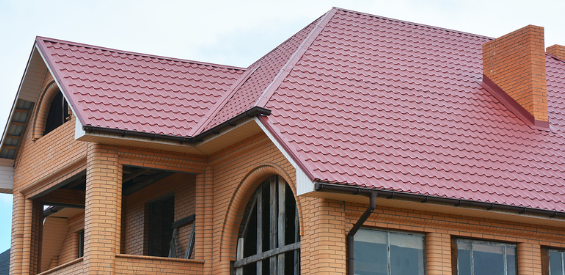
Granules on the surface shield the asphalt from sun and give each shingle its color; a check of gutters for granules shows how a shingle roof is aging. Panels run from eave to ridge in long pieces, joined by raised seams or exposed fasteners; color finishes fade slowly and can scratch during handling. Tile roofing uses clay or concrete pieces that overlap like scales and last through harsh weather; hail can break tile, so a post-storm look is worthwhile. Shakes are thicker and rougher than shingles, with a rustic, hand-split look; treatments and cleaning extend the life of a wood roof. Single-ply membranes such as TPO and EPDM come in wide rolls and seal at the seams; reflective white membranes keep buildings cooler in summer.
Why the Local Climate Matters to a Roof
Reflective surfaces and good color choices help a roof handle strong sun; granule loss in the gutters is a visible sign of sun wear. A dark roof on a still afternoon can heat the attic to oven temperatures; high attic heat is hard on wiring and stored belongings. Humidity brings algae, moss and mildew that streak and soften the surface of a roof; zinc or copper strips at the ridge slow algae growth. Hailstones dent metal, bruise shingles and crack tile in a matter of minutes; a post-storm walk around the property catches early damage. Clay soil in the Brazos Valley swells when wet and shrinks when dry, and houses move with it; not every ceiling stain comes from the roof.
Letting a Roof Breathe
The attic works like a chimney, with intake at the bottom and exit at the top; ask whether the scope includes ventilation upgrades. Trapped heat bakes shingles from below, and trapped moisture rots the deck; bath fans and dryers should vent outside, not into the attic.
Step by Step Through Installation
The crew strips old shingles or panels down to bare wood and sweeps the deck clean; nails scattered across the yard get swept with a magnet. Underlayment rolls out in overlapping courses so that water always runs over the next lap; correct laps matter more than speed. The covering is laid in courses that overlap, with each row hiding the fasteners of the row below; ridge caps and hip pieces finish the top edges. Closing a roofing job means checking every slope and every detail; any missed spots get fixed before the crew leaves.
Why the Angle of a Roof Matters
Pitch is the rise of a roof over its run, and the number decides which coverings are allowed; a slope that looks steep from the street is gentler than it seems. Every change in direction on a roof is a line where water has to be managed; straight runs go fast and tricky corners take time.
Upkeep, Layer by Layer
Leaves, needles and seed pods collect in the lowest spots and hold moisture against the covering; clean surfaces dry faster and wear more slowly. Metal needs an occasional look at fasteners, sealants and scratches; binoculars from the yard reveal a lot.
Roofing Terms in Plain Words
A hip runs down where two slopes meet at an outside corner, and a valley runs where they meet at an inside corner; knowing the words makes a proposal much easier to read. A lap is the overlap between sheets or pieces, whether shingle, underlayment or metal panel; uneven rows are easy to spot from the street. Measuring a roof means area, pitch and the number of edges, not just length and width; ask how the crew measured the roof and how waste was figured.
What to Ask Before Choosing a Covering
Ask which layers will be new and which will stay; a good crew answers in plain terms and without hurry. A good answer covers gutters, downspouts and the edge metal in one conversation; the edge of the roof deserves as much attention as the center. Request thoughts on ventilation, since a roof that cannot breathe wears out early; local knowledge shows in the questions a crew asks about the property.
Questions About Your Roof Are Welcome
Reach out at 979-464-6655 to go over the slopes, the shade and the attic; the conversation begins with the roof as it stands today.