Anyone researching Metal Roofing Services near Bryan Texas meets the same vocabulary of decks, underlayment and flashing; knowing the order of the layers makes every proposal easier to read. The valley's weather tests every layer of a roof, from the deck up to the ridge; careful assembly counts for as much as the covering chosen.
The Anatomy of a Roof
The structure of a roof is timber, sized and spaced to carry weight across the walls; any soft spot in the frame becomes a conversation before covering goes down. A sound deck is flat, dry and firmly fastened to every rafter; new covering is only as good as the wood beneath. The underlayment catches water that sneaks beneath the visible surface; the layer is unglamorous and does real work in a storm. Metal flashing is the quiet hero of every watertight roof; flashing is where a patient crew separates itself from a rushed one. The covering is the visible layer, whether shingles, panels, tile, wood or a membrane; appearance is the smallest part of what the covering does.
Why the Deck Gets So Much Attention
Gaps at panel edges give the wood room to swell in humid weather; each panel needs fasteners into the rafters on a steady pattern. Discolored boards are the map a crew follows to find old leaks; repairs mean cutting out the bad section and nailing in sound wood. Nails and screws set at the right depth and spacing keep panels from shifting; corrosion-resistant fasteners last longer in humid air.
Underlayment and Flashing: The Quiet Layers
Underlayment choices range from asphalt-saturated felt to modern synthetic rolls; exposure limits matter, so covering should follow soon after the sheet. Where two slopes meet, water gathers and speeds up on its way down; ask which valley style the crew prefers and why. A chimney needs a small peaked piece behind it to turn water around the corner; chimney joints are a frequent source of leaks. A cracked boot is one of the simplest causes of a ceiling stain; ask whether the scope lists each vent by type.
What Each Covering Does Well
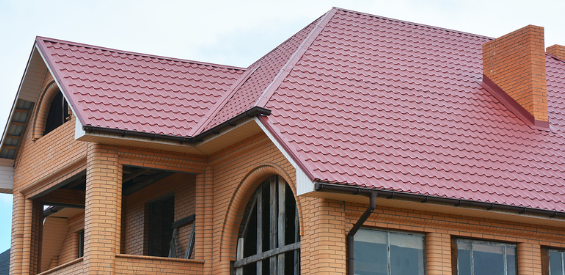
Asphalt shingles dominate pitched roofs because they are light, familiar and quick to install; thicker shingles hold up better under hail and wind. Steel and aluminum panels shed rain quickly and reflect a share of the summer sun; trim and flashing details matter as much as the panels. Clay tile shrugs off sun and heat better than almost any other covering; framing should be checked before tile goes on. Wood roofs need airflow underneath so the pieces can dry between rains; ask what the crew does about spacing and fastening. Commercial buildings, porches and additions with low slopes rely on membrane systems; edges, seams and drains deserve the closest look.
What Summers and Storms Do to Roofing
Reflective surfaces and good color choices help a roof handle strong sun; granule loss in the gutters is a visible sign of sun wear. A dark roof on a still afternoon can heat the attic to oven temperatures; nailing patterns need to allow for daily expansion. Black streaks on shingles are algae feeding on the limestone filler; blue-black streaks are mostly cosmetic but signal damp conditions. Spring storms test a roof with hail, straight-line wind and sudden downpours; a post-storm walk around the property catches early damage. Brazos clay moves, and buildings on it flex a little with each cycle; cracks that open and close with the weather point to the ground.
Letting a Roof Breathe
The attic works like a chimney, with intake at the bottom and exit at the top; blocked soffit vents choke the whole system. A stuffy attic can add heat to the living space below in summer; insulation that blocks soffit vents is a common cause.
The Order of Work on a Roofing Job
Removal reveals what the old roof was hiding, from rot to missing fasteners; the deck is repaired as soon as the old covering is off. Drip edge and underlayment go on next, starting at the eaves and working up the slope; wrinkles and gaps in the sheet layer are visible and fixable. Overlap is the principle behind every shingled or tiled roof, and sloping water does the rest; crooked courses are the most visible sign of rushed work. A final look from the ground confirms straight lines, tidy edges and clean valleys; the written scope is the checklist for the final walk.
How Pitch Chooses the Material
Flat roofs and low-slope roofs need membranes instead of overlapping courses; the pitch belongs in the written scope right next to the covering. Every change in direction on a roof is a line where water has to be managed; ask the crew to point out every joint they plan to flash.
Keeping the Whole System Healthy
Leaves, needles and seed pods collect in the lowest spots and hold moisture against the covering; gutters that overflow wet the edge of the roof and the wall below. Shingles need a glance at the gutters for granules and a check for curling tabs; professional inspections catch what homeowners cannot see.
Roofing Terms in Plain Words
Eaves, rakes and ridges are the three edges every roof proposal mentions; knowing the words makes a proposal much easier to read. Rows of covering step upward from the eave, each hiding the nails of the one below; exposure is one of the first things an inspector checks. Waste, cutting and extra pieces at valleys and ridges add to the material count; an aerial photo or a tape on the roof can both produce a good measurement.
Questions to Ask About Materials and Method
A clear plan names every layer, from the wood up to the visible surface; the written list is the reference for the final walk. Request a description of how water is kept out of every joint; a roof that drains well lasts longer than one that holds water. Ask how the crew handles the heat, the humidity and the storms that visit the region; local knowledge shows in the questions a crew asks about the property.
Plan the Work Step by Step
Reach out at 979-464-6655 to go over the slopes, the shade and the attic; samples and examples are easy to arrange once the material is chosen.