
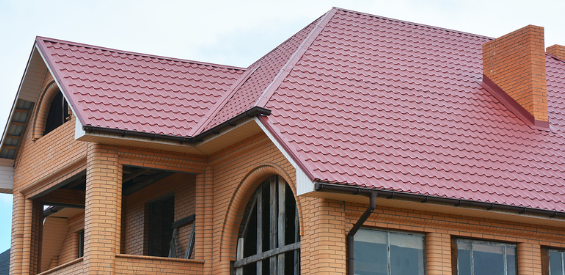
Reading about Shingle Roofing in Bryan Texas works best with the roof in mind as a stack of parts; a roof is a system, and each part has a job. The valley's weather tests every layer of a roof, from the deck up to the ridge; good decisions begin with knowing what each layer is for.
A Roof Is a Stack of Layers
Framing gives the roof its pitch, its lines and its strength; any soft spot in the frame becomes a conversation before covering goes down. A sound deck is flat, dry and firmly fastened to every rafter; a quick press with a boot tells a crew what the deck is doing. Underlayment is the second line of defense, a sheet layer between the deck and the covering; a roof without a good sheet layer has a single point of failure. Joints, edges and openings all call for flashing cut and set by hand; every valley, wall and pipe has its own flashing shape. On top of all the hidden work sits the surface everyone sees from the street; the best coverings suit the roof shape and the weather together.
Decking and the Wood Beneath
Gaps at panel edges give the wood room to swell in humid weather; the deck needs room to breathe, and tight spacing causes ripples. Soft decking feels spongy underfoot and gives way under a crowbar; a good scope says how extra decking will be handled before work begins. Fastener pattern is a quiet part of every proper installation; corrosion-resistant fasteners last longer in humid air.
Backup Layers Under the Visible Roof
Synthetic underlayment has largely overtaken felt because it resists tearing and wrinkling; ask which type goes on the roof and why. A valley may be woven with shingles, cut with a clean line or lined with open metal; ask which valley style the crew prefers and why. Brick and shingle expand at different rates, so the joint takes constant stress; photos of the finished chimney show the work. A cracked boot is one of the simplest causes of a ceiling stain; a quick roof walk after a storm should include the vent pipes.
Choosing the Surface Layer
Asphalt covering suits a wide range of slopes, upkeep habits and design tastes; thicker shingles hold up better under hail and wind. Metal sheds debris, resists fire and handles wind well when it is fastened correctly; trim and flashing details matter as much as the panels. Tile pieces are durable but brittle, and walking on them without care cracks them; the underlayment beneath tile handles the heavy waterproofing work. Natural covering ages to a silvery gray and calls for patient upkeep; ask what the crew does about spacing and fastening. Single-ply membranes such as TPO and EPDM come in wide rolls and seal at the seams; edges, seams and drains deserve the closest look.
Weather That Shapes Roofs in the Valley
Reflective surfaces and good color choices help a roof handle strong sun; the surface layer is the first to show the sun's effect. A dark roof on a still afternoon can heat the attic to oven temperatures; high attic heat is hard on wiring and stored belongings. Damp air and shade give moss and lichen a start on roofs under trees; trimming back branches helps sunlight dry the surface. Spring storms test a roof with hail, straight-line wind and sudden downpours; impact-resistant shingles and sturdy fastening patterns improve storm performance. Clay soil in the Brazos Valley swells when wet and shrinks when dry, and houses move with it; sorting the cause first keeps repairs targeted.
Letting a Roof Breathe
Ventilation pulls cool air in low and pushes hot air out high; mixing different vent types can short-circuit airflow. A stuffy attic can add heat to the living space below in summer; ventilation is simple to fix during a roof job.
A Roof Is Built in Sequence
Removal reveals what the old roof was hiding, from rot to missing fasteners; nails scattered across the yard get swept with a magnet. The base layers go down in a precise order, from lowest edge to highest ridge; edges hold the roof against wind, so fastening there gets extra attention. Shingles, panels or tiles are set from the bottom edge upward in straight lines; the pattern of nails is part of the product instructions. A final look from the ground confirms straight lines, tidy edges and clean valleys; gutters are cleared of granules and debris.
Why the Angle of a Roof Matters
Asphalt shingles need a minimum slope to shed water reliably; a slope that looks steep from the street is gentler than it seems. More valleys, walls and corners mean more flashing and more places for a detail to fail; a good scope names every valley and every wall joint.
Maintenance That Matches the Materials
Regular clearing is the simplest upkeep a roof can get; check after storms, since wind drops branches and debris in one afternoon. Tile needs a careful survey for cracked or slipped pieces; small repairs made early keep a roof out of trouble.
Decoding the Vocabulary of a Proposal
A hip runs down where two slopes meet at an outside corner, and a valley runs where they meet at an inside corner; write unfamiliar terms in the margin and ask about them. The visible part of a shingle, called the reveal or exposure, is only a fraction of the whole piece; uneven rows are easy to spot from the street. A square is a unit of area, so a bundle count and a square count tell different stories; the measurement is the foundation of every material order.
Questions That Sort Good Plans From Vague Ones
Request a list of the materials by product line and not just by color; each layer has a purpose, and the plan should say what it is. A good answer covers gutters, downspouts and the edge metal in one conversation; a roof that drains well lasts longer than one that holds water. Find out how the plan accounts for sun exposure, attic heat and damp shade; generic answers suit generic roofs, and few roofs are generic.
Ask About Materials, Layers and Methods
Call 979-464-6655 to talk through the covering, the underlayment and the details; a description of the roof shape helps narrow the options.